In our digital age, we still rely heavily on physical documents—from cherished photographs and important certificates to frequently used menus and ID cards. Protecting these items from moisture, dust, fading, and general wear and tear is crucial. This is where the indispensable laminating machine comes into play. But have you ever wondered what happens inside that sleek device as your document slides through? This article will demystify the process, exploring the inner workings, different types, and key components that make a laminating machine an essential tool for homes, offices, and schools.
The Core Principle: Heat and Pressure
At its heart, the fundamental principle behind most laminators is simple: the application of heat and pressure to seal a document within protective plastic sheets. This process effectively creates a durable, tamper-resistant, and often waterproof barrier around your paper. The two main types of laminating machines—pouch laminators and roll laminators—achieve this same goal through slightly different mechanisms.
The Two Main Types of Laminating Machines
Understanding the type of machine is key to understanding the process.
1.Pouch LaminatorsThis is the most common type of laminating machine found in homes and small offices. As the name suggests, it uses pre-cut plastic pouches. Each pouch is a sleeve that is open on one end, allowing you to insert your document. The pouch consists of two sheets of plastic film (typically polyester or polypropylene) coated with a heat-activated adhesive on the inner sides.
· How it Works:
Preparation: You place your document inside the laminating pouch, leaving a small border around the edges.
Insertion: The sealed end of the pouch is fed into the machine first.
The Laminating Process: As the pouch is pulled into the machine by motorized rollers, it passes through a heating element. The heat melts the adhesive layer, turning it from a solid to a liquid. The pressure from the rollers then squeezes the molten adhesive against your document, forcing out any air bubbles and ensuring a complete bond.
Cooling and Setting: The laminated document then passes through a set of cooling rollers (or simply exits the machine to cool naturally). This cooling phase solidifies the adhesive once again, permanently encasing your document in a rigid, sealed plastic shell.
Pouch laminators are categorized by the thickness of the pouches they can handle, measured in microns (e.g., 80, 125, 250 micron), which determines the rigidity of the final product.
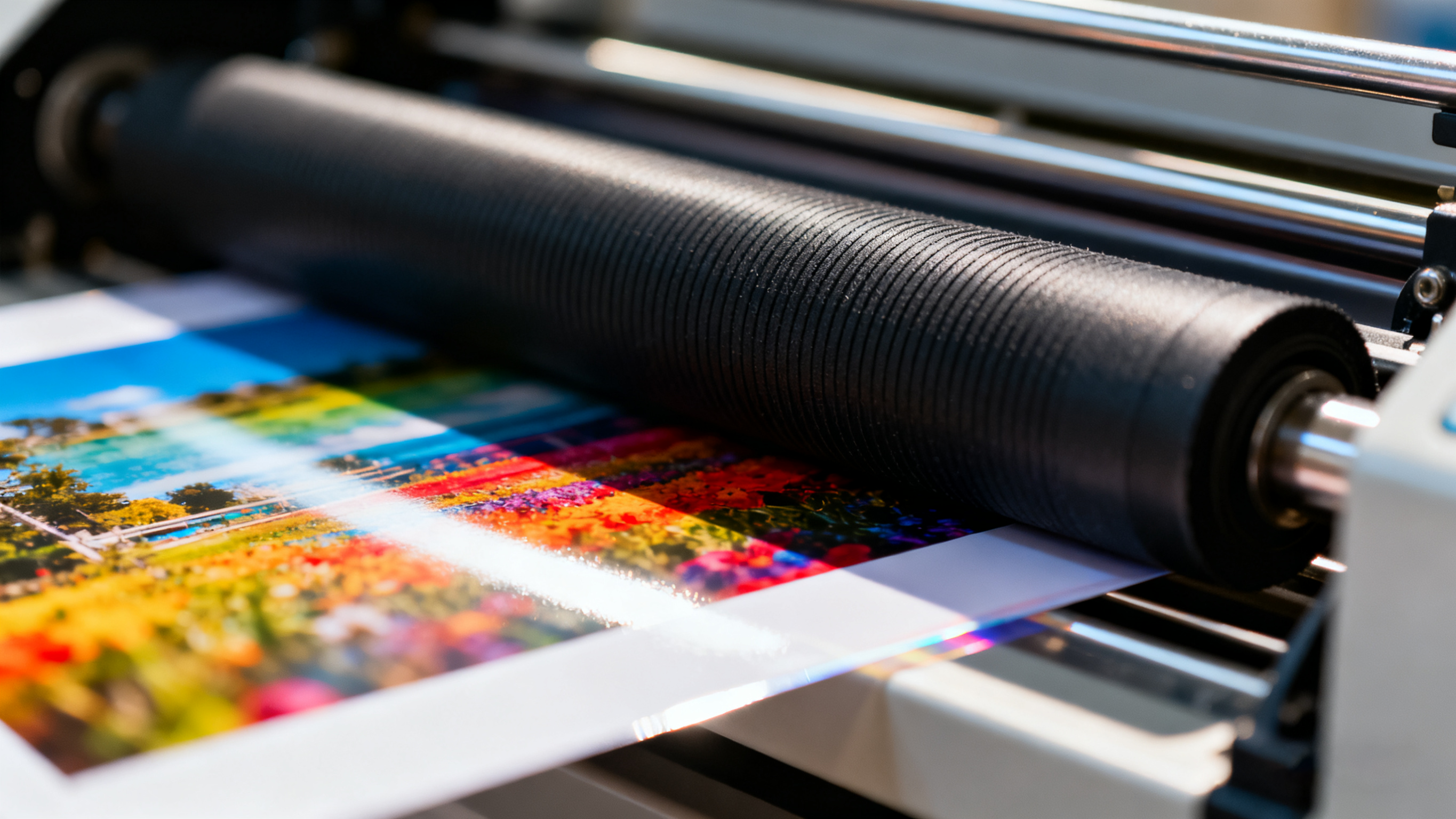
2. Roll LaminatorsRoll laminators are heavy-duty machines designed for high-volume laminating, commonly used in print shops and publishing houses. Instead of pre-cut pouches, they use two large rolls of laminating film—one for the top and one for the bottom of the document.
· How it Works:
Loading the Film: The two rolls are loaded into the machine, and the films are fed together into the roller system.
The Process: Your document is fed into the machine, where it is sandwiched between the two layers of film. The machine then follows the same heat-and-pressure principle: the assembly passes through heated rollers that activate the adhesive, followed by cooling rollers that set the laminate.
Trimming: After the document exits the machine, the excess film around the edges is trimmed away, leaving a perfectly sealed item.
Roll laminators are ideal for laminating large-format items or a continuous stream of documents of varying sizes.
Key Components of a Laminating Machine
No matter the type, every thermal laminating machine shares several critical components:
· Heating Element: This is the engine of the machine. It heats up to a specific temperature (usually adjustable) to melt the adhesive on the laminating film without burning it or damaging the document.
· Motorized Rollers: These are the workhorses. A set of two or more rollers pulls the pouch or document through the machine with consistent pressure. The primary rollers apply the heat and initial pressure, while secondary cooling rollers help solidify the laminate.
· Thermostat: This component regulates the temperature of the heating element, ensuring it stays within the optimal range for the specific film thickness being used. This prevents overheating and ensures a consistent, bubble-free finish.
· Reverse Function: A crucial safety and convenience feature. If a pouch is misaligned or starts to jam, the reverse function allows you to back it out safely, preventing a costly and messy jam.
· Adjustable Temperature/Speed Settings: More advanced models allow users to adjust the heat and processing speed based on the thickness of the laminating pouch, ensuring perfect results every time.
What About Cold Laminators?
While heat-assisted laminating is the standard, there is another category: cold laminators. These machines use pressure-sensitive films that do not require heat to activate the adhesive. Instead, the pressure from the rollers alone is sufficient to create a bond.
· Advantages: Cold laminating is perfect for heat-sensitive documents like photos from inkjet printers, certain types of fabric, or items with heat-sensitive foils.
· Disadvantages: The finish may not be as rigid or as permanently sealed as with thermal laminating, and it can be more prone to peeling over time.
The Step-by-Step Laminating Process
To bring it all together, here is the typical workflow for using a standard pouch laminator:
1.Warm-Up: Turn on the laminating machine and allow it to heat up fully, indicated by a ready light.
2.Prepare the Document: Place your document inside the laminating pouch. Ensure it is centered and that there are no loose particles on it.
3.Feed the Machine: Insert the sealed end of the pouch into the machine's entry slot.
4.Automatic Processing: The machine's rollers will grab the pouch and pull it through. Do not pull or push it from the other side.
5.Retrieve and Cool: Catch the laminated document as it exits. Place it on a flat, heat-resistant surface to cool and fully harden for a minute or two.
Conclusion: More Than Just Plastic
A laminating machine is a marvel of simple yet effective engineering. By masterfully combining heat and pressure, it transforms a fragile piece of paper into a durable, professional, and long-lasting item. Whether you are preserving a memory, protecting a vital record, or creating a reusable resource, understanding how your laminating machine works empowers you to achieve the best possible results, ensuring your important documents stand the test of time.
laminating machine
best laminating machine
industrial laminating machine
 English
 العربية
 Français
 Русский
 Español
 Português
 Deutsch
 italiano
 日本語
日本語 한국어
한국어 Nederlands
 Tiếng Việt
 ไทย
ไทย Polski
 Türkçe
 ភាសាខ្មែរ
 Bahasa Melayu
 ဗမာစာ
ဗမာစာ தமிழ்
தமிழ் Filipino
 Bahasa Indonesia
 Română
 Čeština
 Монгол
 қазақ
қазақ Српски
 हिन्दी
 فارسی
فارسی Kiswahili
 Slovenčina
 українська
 Հայերեն
 Latine
 Dansk
Dansk اردو
اردو Shqip
Shqip বাংলা
বাংলা Hrvatski
 Afrikaans
 Gaeilge
 Oʻzbekcha
 latviešu
 Azərbaycan dili
 Беларуская мова
 Bosanski
 ગુજરાતી
 Basa Jawa
 Kinyarwanda
 Кыргызча
 Македонски
 Malti
Malti


