Founded in 2006, XHD has become a major manufacturer in the industry.
Email : sales01@xhdjx.com
Please Choose Your Language

Views: 0 Author: Site Editor Publish Time: 2025-12-12 Origin: Site


If you look around your home or workplace, you will likely see dozens of items created using a process called extrusion. From the PVC pipes in your walls to the plastic film wrapping your food, extrusion machines are the silent workhorses behind countless everyday products. But what exactly is an extrusion machine, and how does it work?
Understanding the meaning of an extrusion machine involves more than just knowing its definition. It requires a look into the mechanics, the materials used, and the vast range of applications this technology serves. In manufacturing, an extrusion machine forces material through a shaped die to create continuous objects with a fixed cross-sectional profile. This process is fundamental to industries ranging from construction and automotive to food processing and packaging.
This guide will break down the mechanics of extrusion, explore different types of machines—including the specialized stretch film extruder—and highlight why this technology remains a cornerstone of modern manufacturing.
At its core, an extrusion machine is a device used to melt and process raw materials—typically plastic or metal—into a continuous profile. The basic principle is similar to squeezing toothpaste out of a tube. The pressure applied forces the paste (material) through the round opening (die), resulting in a long, cylindrical shape.
In an industrial setting, the process is far more complex and precise. Raw material, often in the form of pellets or granules, is fed into the machine's barrel. inside, a rotating screw generates friction and heat, melting the material. Once molten, the material is pushed through a die at the end of the barrel, which shapes it into the desired form. This could be a pipe, a sheet, a film, or a complex profile for window frames.
The key advantage of using an extrusion machine is its ability to produce large volumes of material with consistent quality and dimensions. Because the process is continuous, it is highly efficient and cost-effective for mass production.

To fully grasp the meaning of an extrusion machine, it helps to understand the step-by-step process that occurs inside the equipment. While there are variations depending on the material and end product, the general mechanism remains consistent.
The process begins at the hopper, a funnel-shaped container where raw thermoplastic material (resins) is poured. These resins often come in pellet form and may be mixed with additives like colorants or UV inhibitors before entering the machine.
From the hopper, gravity feeds the pellets into the barrel. Inside the barrel lies a long, rotating screw. As the screw turns, it moves the material forward. The mechanical friction generated by the screw, combined with external heaters wrapped around the barrel, melts the plastic pellets into a viscous liquid.
Before the molten plastic reaches the die, it typically passes through a screen pack. This assembly filters out contaminants and helps build back pressure in the barrel, which ensures the melt is uniform and free of air bubbles.
This is the critical moment where the specific shape is formed. The molten plastic is forced through the die, which acts as a mold for the final profile. The design of the die determines whether the output is a flat sheet, a hollow pipe, or a thin film.
Once the material exits the die, it is still hot and pliable. It must be cooled rapidly to retain its shape. This is usually achieved using water baths, cooling rolls, or air knives. After cooling, the continuous product is cut into specified lengths or wound onto spools.
Extrusion technology is versatile, and different machines are engineered for specific tasks. While the single-screw extruder is the most common, other variations exist to handle complex materials and products.
These are the industry standard for general plastics processing. They are relatively simple, cost-effective, and excellent for melting and pumping polymers. They are widely used for producing pipes, sheets, and profiles.
As the name suggests, these machines utilize two intermeshing screws. Twin-screw extruders offer better mixing capabilities, making them ideal for compounding materials, processing heat-sensitive polymers, or working with formulations that require high levels of fillers and additives.
This specialized setup creates plastic films. The molten plastic is extruded vertically through a circular die, creating a tube. Air is then blown into the center of the tube, inflating it like a balloon to the desired diameter and thickness. This is the primary method for making shopping bags and agricultural films.
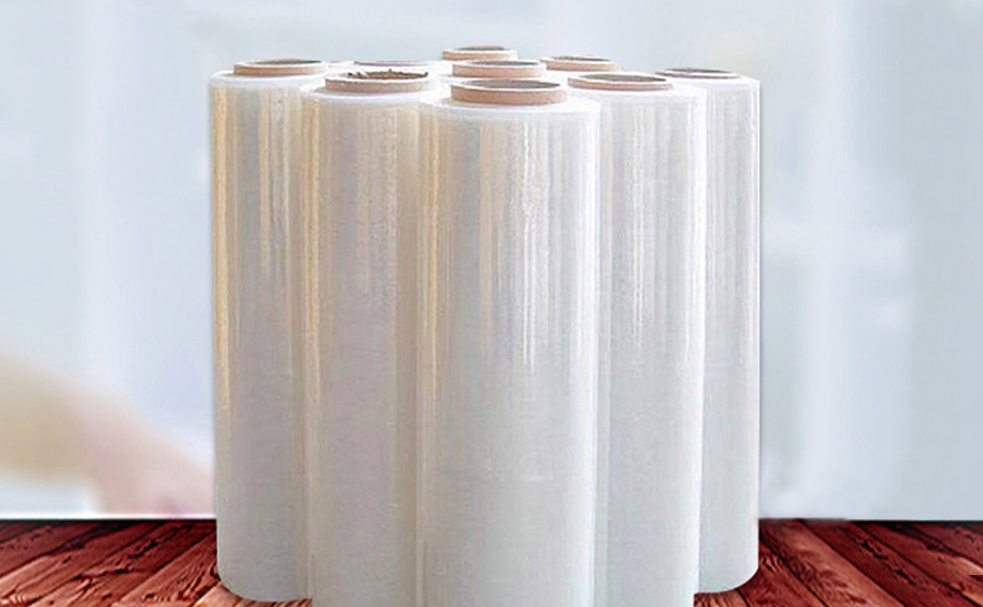
A specific and vital category of extrusion machinery is the stretch film extruder. These machines are designed expressly for producing the thin, elastic plastic film used to wrap pallets and secure goods for shipping.
A stretch film extruder typically uses a cast film process. The molten polymer is extruded through a flat die onto a chilled roller. The rapid cooling solidifies the film instantly, ensuring clarity and strength. Advanced stretch film extruders often use multiple layers—sometimes up to 50 or more micro-layers—to create films that are incredibly thin yet puncture-resistant. This efficiency reduces material usage while maintaining load stability, a critical factor for logistics companies aiming to cut costs and waste.
The utility of the extrusion machine extends far beyond simple plastic parts. Its ability to process various materials makes it indispensable across multiple sectors.
The construction industry relies heavily on extrusion. PVC pipes for plumbing, vinyl siding for homes, and complex window frame profiles are all products of this process. The durability and weather resistance of extruded plastics make them ideal alternatives to wood and metal.
This is perhaps the most visible application. From the clear blister packs on store shelves to the stretch film securing pallets in warehouses, extrusion is everywhere. The stretch film extruder, in particular, plays a crucial role in the global supply chain, ensuring products arrive at their destination intact.
Extrusion isn't limited to plastics. In the food industry, extrusion machines are used to produce pasta, breakfast cereals, snacks, and pet food. The process cooks and shapes the dough simultaneously, allowing for the creation of specific textures and shapes that appeal to consumers.
Modern vehicles contain numerous extruded parts, including door seals, wire insulation, and fuel lines. The lightweight nature of extruded plastics helps improve fuel efficiency without compromising safety or performance.
The meaning of an extrusion machine goes beyond its mechanical definition; it represents efficiency and innovation in manufacturing. These machines allow companies to reduce waste by recycling scrap material directly back into the process. They enable the creation of complex, multi-layered materials that combine the properties of different polymers—such as adding a barrier layer to food packaging to extend shelf life.
Furthermore, advancements in technology are making these machines smarter. Modern extruders are equipped with sensors and software that monitor pressure, temperature, and output in real-time, adjusting parameters automatically to ensure consistent quality. This level of automation reduces downtime and energy consumption, making the manufacturing process more sustainable.
As industries push for more sustainable and efficient production methods, the extrusion machine continues to evolve. We are seeing a shift towards machines capable of processing biodegradable plastics and higher percentages of recycled content.
The stretch film extruder is also advancing, with manufacturers developing technologies to produce thinner films that maintain high performance. This "downgauging" reduces the amount of plastic needed per load, directly addressing environmental concerns regarding plastic waste.
Understanding the extrusion machine is understanding the backbone of modern material processing. Whether it's protecting your food, transporting water to your home, or securing cargo for a cross-country journey, the products created by these machines are integral to our daily lives. As technology advances, we can expect extrusion processes to become even more precise, energy-efficient, and environmentally friendly.


