Finding the right stretch film manufacturing machine is a critical investment for any business in the packaging industry. As demand for durable and efficient packaging solutions grows, many companies are looking to China for high-quality, competitively priced machinery. If you're searching for a "China stretch film manufacturing machine for sale," you're in the right place.
This guide will walk you through the essential factors to consider when purchasing this type of equipment. We'll cover the technology behind these machines, the benefits of sourcing from Chinese manufacturers, what to look for in a supplier, and how to make an informed decision that supports your business goals. By the end of this article, you will have a clear roadmap for navigating the market and securing a machine that boosts your production capabilities.
What is a Stretch Film Manufacturing Machine?
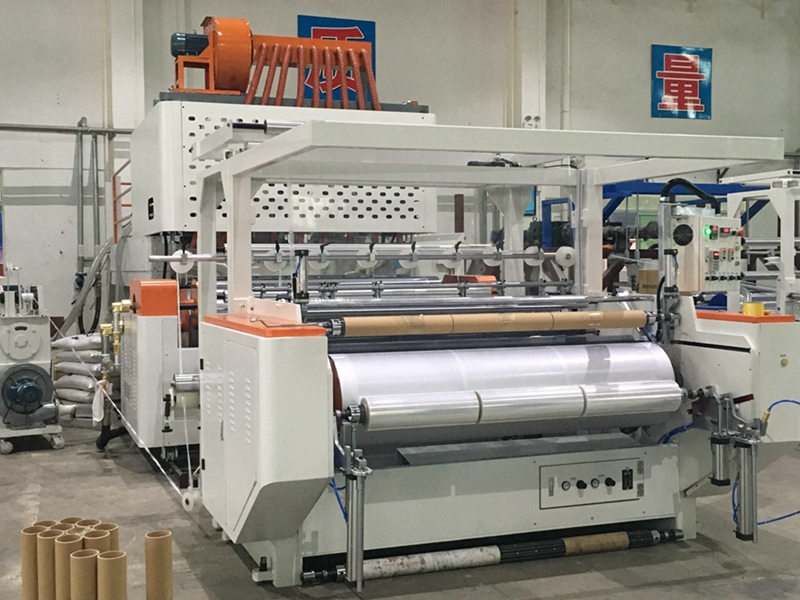
A stretch film manufacturing machine is a piece of industrial equipment designed to produce stretch film—a highly elastic plastic wrap used to secure products on pallets for shipping and storage. The process, known as cast extrusion, involves melting plastic resin pellets and extruding them through a flat die onto a cooled roller. This rapid cooling process solidifies the film while giving it its characteristic strength, clarity, and "stretchiness."
These machines are complex systems comprising several key components:
· Extruder: Melts the plastic resin (typically Linear Low-Density Polyethylene, or LLDPE).
· Die Head: Shapes the molten plastic into a thin, wide sheet.
· Casting Unit: A series of cooled rollers (chill rolls) that solidify the film.
· Winding System: Automatically rolls the finished film into jumbo rolls, which can then be cut into smaller, market-ready rolls.
Modern machines often include advanced features like automatic thickness control, edge trimming and recycling systems, and computer-controlled interfaces for precise operation.
Why Source Your Machine from China?
Chinese manufacturers have become global leaders in producing industrial machinery, and the stretch film sector is no exception. There are several compelling reasons why businesses worldwide turn to China when looking for a stretch film manufacturing machine.
Competitive Pricing
One of the most significant advantages is cost-effectiveness. Chinese manufacturers can often produce high-quality machines at a fraction of the cost of their European or North American counterparts. This is due to lower labor costs, a mature supply chain for raw materials and components, and economies of scale. For a business, this means a lower initial investment and a faster return on investment (ROI).
Technological Advancement
The narrative that Chinese manufacturing sacrifices quality for price is outdated. Today, leading Chinese manufacturers invest heavily in research and development. They incorporate advanced technologies, including automation from brands like Siemens and high-precision components, into their machine designs. This results in equipment that is not only affordable but also reliable, efficient, and capable of producing high-grade stretch film that meets international standards.
Wide Range of Options
The Chinese market offers an extensive variety of machines to suit different production needs. Whether you are a small startup needing a basic, single-layer machine or a large corporation requiring a high-speed, multi-layer co-extrusion line, you can find a suitable option. This variety allows you to select a machine that perfectly aligns with your production volume, budget, and quality requirements.
Customization Capabilities
Many Chinese suppliers are highly flexible and willing to customize machines to meet specific customer needs. This could include modifications for different film widths, thicknesses, or the integration of specific branded components (like motors or PLCs). This bespoke approach ensures you get a machine that is perfectly tailored to your operational workflow.
Key Features to Look for in a Stretch Film Machine
When you begin evaluating different models, it's crucial to look beyond the price tag. The right machine is an asset that will drive your business forward for years. Here are the key features to consider:
Number of Layers (Co-extrusion)
Stretch film can be produced with one, three, five, seven, or even more layers. Multi-layer (co-extrusion) machines offer significant advantages:
· 3/5-Layer Machines: These are the industry standard. They allow for different types of LLDPE and additives to be used in each layer. For example, the outer layers can be formulated for high cling, while the core layer provides strength and puncture resistance. This creates a superior, more versatile film.
· Single-Layer Machines: These are simpler and more affordable, making them a good entry-point for small-scale operations. However, the film produced is generally less robust than multi-layer film.
For most commercial applications, a 3 or 5-layer machine is the recommended choice for producing high-quality, competitive products.
Production Capacity and Speed
Machine speed is typically measured in meters per minute (m/min). A higher speed means greater output. Consider your current and future production demands.
· Entry-level machines: Might operate at speeds around 150-200 m/min.
· High-end machines: Can exceed 350-400 m/min, offering massive production capacity for large-scale operations.
Also, consider the maximum width of the film the machine can produce (e.g., 1000mm, 1500mm, 2000mm). A wider film can be more efficient for certain applications or can be slit into more smaller rolls simultaneously.
Automation and Control Systems
Modern machines feature a Programmable Logic Controller (PLC) with a touchscreen interface. This allows for:
· Centralized control: Operators can manage all machine parameters (speed, temperature, thickness) from one screen.
· Recipe storage: Save settings for different types of film, ensuring consistency.
· Automatic thickness gauging: An online system that continuously measures film thickness and automatically adjusts the die to maintain uniformity. This reduces material waste and ensures consistent quality.
Look for machines that use reputable PLC brands like Siemens or Mitsubishi for reliability and ease of service.
Energy Efficiency
An industrial machine runs for long hours, and energy consumption can be a major operational cost. Ask suppliers about energy-saving features, such as high-efficiency motors, advanced heating elements, and smart power management systems. A more energy-efficient machine may have a higher initial cost but will save you money in the long run.
Finding the Right Supplier
Choosing the right supplier is just as important as choosing the right machine. A reliable partner will provide not only a quality product but also the support you need to succeed.
Verify Manufacturer Credentials
Don't just rely on a flashy website. Look for a manufacturer, not just a trading company.
· Experience: How long have they been manufacturing stretch film machines? An experienced manufacturer will have a deeper understanding of the technology.
· Certifications: Look for quality management certifications like ISO 9001.
· Factory Visit: If possible, visit the factory. This is the best way to assess their manufacturing capabilities, quality control processes, and professionalism. If a visit isn't feasible, request a live video tour.
Ask for Case Studies and References
A reputable supplier will be happy to provide you with case studies or connect you with existing customers. Speaking to other buyers can give you invaluable insight into the machine's real-world performance and the supplier's after-sales service.
Clarify After-Sales Support and Warranty
Your relationship with the supplier doesn't end after the sale. Clarify the following:
· Warranty: What is the warranty period, and what does it cover?
· Installation and Training: Does the supplier send technicians to your facility for installation and to train your operators?
· Technical Support: What kind of remote technical support do they offer? Can they assist with troubleshooting via video call?
· Spare Parts: How easily can you obtain spare parts? Do they keep critical components in stock?
A strong after-sales support system is non-negotiable. It ensures minimal downtime and keeps your production line running smoothly.
Make Your Next Strategic Investment
Investing in a China stretch film manufacturing machine can be a game-changer for your business, offering a powerful combination of quality, performance, and value. By focusing on the key features of the machine—such as the number of layers, production speed, and level of automation—and by thoroughly vetting your potential supplier, you can make a confident and strategic purchase.
Take the time to do your research, ask detailed questions, and prioritize long-term value over short-term savings. The right machine will not only meet your production needs today but also support your company's growth for years to come.
china stretch film manufacturing machine for sale
stretch film manufacturing machine
china stretch film manufacturing machine manufacturer
 English
 العربية
 Français
 Русский
 Español
 Português
 Deutsch
 italiano
 日本語
日本語 한국어
한국어 Nederlands
 Tiếng Việt
 ไทย
ไทย Polski
 Türkçe
 ភាសាខ្មែរ
 Bahasa Melayu
 ဗမာစာ
ဗမာစာ தமிழ்
தமிழ் Filipino
 Bahasa Indonesia
 Română
 Čeština
 Монгол
 қазақ
қазақ Српски
 हिन्दी
 فارسی
فارسی Kiswahili
 Slovenčina
 українська
 Հայերեն
 Latine
 Dansk
Dansk اردو
اردو Shqip
Shqip বাংলা
বাংলা Hrvatski
 Afrikaans
 Gaeilge
 Oʻzbekcha
 latviešu
 Azərbaycan dili
 Беларуская мова
 Bosanski
 ગુજરાતી
 Basa Jawa
 Kinyarwanda
 Кыргызча
 Македонски
 Malti
Malti


