Stretch film, also known as stretch wrap, is a crucial material in the logistics and packaging industry. It securely wraps pallets, bundles products, and protects goods during transit and storage. But have you ever wondered how this highly elastic, durable plastic film is made? The answer lies in a sophisticated piece of equipment: the stretch film manufacturing machine.
Understanding how these machines operate is essential for any business involved in packaging, shipping, or manufacturing. This guide will walk you through the entire process, from the raw materials used to the key components of the machine and the different production methods. By the end, you'll have a comprehensive understanding of what goes into producing high-quality stretch film and how to choose the right machinery for your needs.
What Is a Stretch Film Manufacturing Machine?
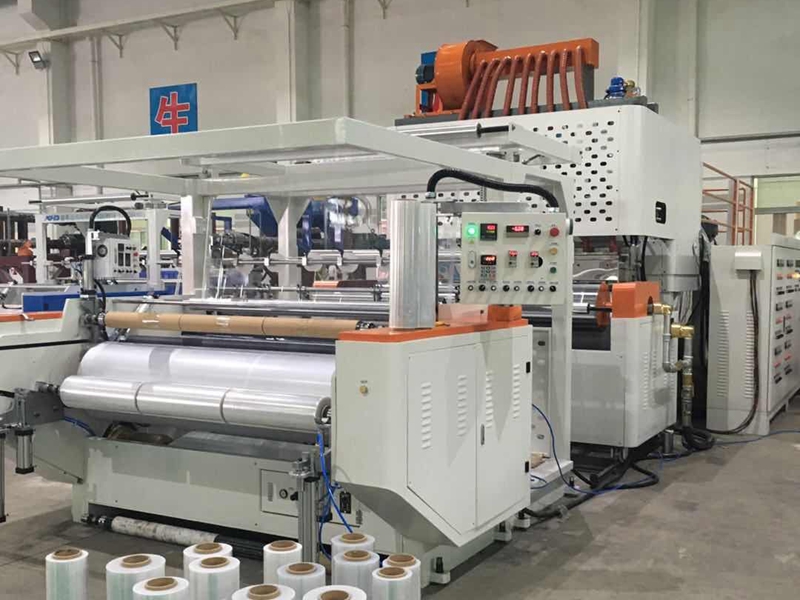
A stretch film manufacturing machine is a specialized production line that transforms raw plastic resin into stretchable film. These machines are designed to heat, extrude, cool, and wind plastic material into large rolls, which can then be cut into smaller, usable sizes. The process requires precision control over temperature, pressure, and speed to produce film with the desired thickness, clarity, and stretchability.
The primary raw material used is Linear Low-Density Polyethylene (LLDPE), often blended with other polymers like metallocene LLDPE (mLLDPE) or Low-Density Polyethylene (LDPE) to enhance specific properties such as puncture resistance, cling, and tensile strength.
How Do Stretch Film Machines Work?
The journey from tiny plastic pellets to a finished roll of stretch film involves several complex stages. While the specific configurations of a stretch film manufacturing machine can vary, the fundamental process remains consistent. It can be broken down into four main steps: extrusion, cooling, winding, and slitting.
1. Extrusion: Melting the Raw Material
The process begins at the extruder. Raw LLDPE pellets, along with any additives, are fed from a hopper into a long, heated barrel containing a rotating screw.
· Heating and Melting: As the screw turns, it pushes the plastic pellets forward. Frictional heat from the screw's rotation, combined with external heating elements along the barrel, melts the pellets into a homogenous, molten plastic substance called "melt."
· Mixing and Pressurizing: The screw is designed not just to transport the material but also to mix it thoroughly and build up pressure. This ensures the melt is uniform in temperature and consistency before it leaves the extruder.
Most modern machines use a multi-layer co-extrusion process. This involves using several extruders to melt different material blends simultaneously. These molten layers are then combined in a feedblock before being formed into a single, multi-layered sheet of film. This allows manufacturers to create film with distinct properties; for example, an outer "cling" layer and a tough, puncture-resistant inner core.
2. Film Forming and Cooling: The Cast vs. Blown Method
Once the molten plastic leaves the extruder, it must be formed into a thin sheet and cooled rapidly. There are two primary methods for this, each producing film with different characteristics:
The Cast Film Method
This is the most common method for producing high-quality stretch film.
· Forming: The molten plastic is pumped through a flat extrusion die, which spreads it into a thin, wide sheet.
· Cooling: This sheet is then immediately cast onto a series of large, chilled rollers, often called "chill rolls." These rolls rapidly cool and solidify the plastic. The speed of the cooling process is critical for determining the film's clarity and properties.
Advantages of Cast Film:
· Excellent clarity, allowing for easy scanning of barcodes.
· Quiet unwinding from the roll.
· Consistent thickness and cling.
· Higher production speeds.
The Blown Film Method
This method is less common for stretch film but is widely used for other plastic films like shopping bags.
· Forming: The molten plastic is extruded through a circular die and forced vertically upwards to form a thin tube of plastic.
· Cooling: Air is blown into the center of thetube, expanding it like a balloon to the desired diameter and thickness. The outside of this "bubble" is cooled by a high-speed ring of air. The bubble is then collapsed and flattened into a sheet.
Advantages of Blown Film:
· Higher puncture and tear resistance.
· Greater load-holding power.
· Noisy unwind, which can be a deterrent in some workplaces.
3. Edge Trimming and Treatment
As the film solidifies, its edges can become thicker and less uniform. An edge trimming system uses sharp blades to cut away these imperfections, ensuring the film has a consistent width. The trimmed material is often collected and recycled back into the production process to minimize waste.
4. Winding and Slitting
The final stage is winding the continuous sheet of film into large "jumbo" rolls.
· Primary Winding: A winder gathers the finished film onto a massive core, creating a jumbo roll that can weigh several tons. The tension and speed must be precisely controlled to prevent wrinkles or defects.
· Slitting and Rewinding: The jumbo roll is then moved to a slitting and rewinding machine. Here, it is unwound and cut into narrower widths, such as hand rolls (typically 12-20 inches) or machine rolls. These smaller rolls are then wound onto individual cardboard cores, ready for packaging and shipping.
Key Components of a Stretch Film Machine
Understanding the core components of a stretch film manufacturing machine helps appreciate its complexity and the factors that influence film quality.
· Extruder: The heart of the machine, responsible for melting and pressurizing the plastic resin. A co-extrusion setup will have multiple extruders.
· Flat Die (Cast Method) or Circular Die (Blown Method): The component that shapes the molten plastic into a sheet or tube.
· Chill Rolls: Large, internally cooled rollers that solidify the film in the cast process. Their surface finish and temperature are critical for film quality.
· Air Ring (Blown Method): Provides a precise curtain of air to cool the film bubble.
· Winding System: The machinery that winds the film onto cores. Modern systems have automated tension control and can perform quick roll changes.
· PLC Control System: A Programmable Logic Controller (PLC) is the machine's brain. It uses a touchscreen interface to allow operators to monitor and control every parameter, from extruder temperatures to winding speed and film thickness.
Choosing the Right Machine
For businesses looking to invest in a stretch film manufacturing machine, the decision comes down to several factors:
· Production Volume: High-speed cast film lines are suited for large-scale operations, while smaller or more specialized production might use a different setup.
· Film Type: The desired properties of the final product—clarity, puncture resistance, one-sided cling—will determine whether a cast or blown film line is more appropriate.
· Number of Layers: Machines can range from simple 3-layer lines to more complex 5, 7, or even 9-layer systems. More layers allow for greater control over film properties and can sometimes reduce material costs by using cheaper recycled material in the core layers.
· Automation: Modern machines offer high levels of automation, from automatic roll changes to online thickness gauging, which reduces labor costs and improves consistency.
The Future of Stretch Film Manufacturing
The industry is continuously evolving. Sustainability is a major driving force, with manufacturers developing thinner, stronger films that reduce plastic consumption without compromising performance. There is also a growing focus on incorporating recycled content into stretch film.
As technology advances, stretch film manufacturing machines are becoming more efficient, automated, and capable of producing highly specialized films. These innovations ensure that stretch film remains a vital, cost-effective solution for securing goods around the world.
stretch film manufacturing machine
stretch film machine manufacturers
machine stretch film manufacturers
 English
 العربية
 Français
 Русский
 Español
 Português
 Deutsch
 italiano
 日本語
日本語 한국어
한국어 Nederlands
 Tiếng Việt
 ไทย
ไทย Polski
 Türkçe
 ភាសាខ្មែរ
 Bahasa Melayu
 ဗမာစာ
ဗမာစာ தமிழ்
தமிழ் Filipino
 Bahasa Indonesia
 Română
 Čeština
 Монгол
 қазақ
қазақ Српски
 हिन्दी
 فارسی
فارسی Kiswahili
 Slovenčina
 українська
 Հայերեն
 Latine
 Dansk
Dansk اردو
اردو Shqip
Shqip বাংলা
বাংলা Hrvatski
 Afrikaans
 Gaeilge
 Oʻzbekcha
 latviešu
 Azərbaycan dili
 Беларуская мова
 Bosanski
 ગુજરાતી
 Basa Jawa
 Kinyarwanda
 Кыргызча
 Македонски
 Malti
Malti


