If you've ever received a pallet of goods, chances are it was secured with a thin, elastic plastic film. This process, known as stretch wrapping, is fundamental to modern logistics and supply chain management. It ensures that products remain stable and protected during transit, from the warehouse to their final destination. While this can be done by hand, a stretch wrapping machine automates the process, offering significant improvements in efficiency, consistency, and safety.
This guide explains what a stretch wrapping machine is, how it works, and the benefits it can bring to your business operations. We will also explore the process of how the essential material for this technology, stretch film, is made. Understanding these machines can help you make an informed decision about optimizing your packaging and shipping processes.
How Does a Stretch Wrapping Machine Work?
A stretch wrapping machine is a piece of equipment designed to wrap a pallet load of products with stretch film automatically or semi-automatically. The core function is to apply the film under tension, causing it to stretch and tightly conform to the items on the pallet. This tension creates a secure, unified load that is resistant to shifting, damage, and environmental factors like dust and moisture.
The basic process involves a few key steps:
1.Loading: An operator places a pallet loaded with goods onto the machine's turntable or within its wrapping zone.
2.Film Application: The film is attached to the load, either manually by the operator in a semi-automatic machine or automatically by a clamp-and-cut system in a fully automatic machine.
3.Wrapping Cycle: The machine then begins its wrapping cycle. In a turntable model, the pallet rotates while a film delivery system moves vertically up and down a mast, applying the film in an overlapping pattern. In rotary arm models, the load remains stationary while a rotating arm carrying the film revolves around it.
4.Cutting and Securing: Once the pre-set number of wraps is complete, the film is cut and secured to the load, often with a heat-sealing device or a "wipe-down" arm that presses the tail of the film against the pallet.
The "stretch" in stretch wrapping is crucial. The film is pre-stretched by the machine before it's applied to the load. This process can increase the film's yield by 150% to 300%, meaning one foot of film can be stretched to cover two-and-a-half to four feet. This not only makes the load more secure but also significantly reduces film consumption and costs.
Types of Stretch Wrapping Machines
Stretch wrappers come in various configurations to suit different operational needs, from small-scale businesses to high-volume distribution centers. The main types include:
Turntable Stretch Wrappers
This is the most common type of stretch wrapping machine. The pallet is placed on a rotating platform (turntable) that spins the load. As it rotates, a film carriage moves up and down a mast to apply the film. They are ideal for stable and relatively lightweight loads.
Rotary Arm Stretch Wrappers
For very heavy, unstable, or irregularly shaped loads, a rotary arm wrapper is a better choice. The pallet remains stationary on the floor while a mechanical arm rotates around it to apply the film. This prevents the load from shifting or toppling, which could happen on a turntable.
Orbital Stretch Wrappers
Also known as a "ringer," an orbital wrapper is designed for long, oversized products like pipes, lumber, or carpets. The product passes horizontally through a large, rotating ring that dispenses the film, encasing the item completely.
These machines can be further categorized as semi-automatic, where an operator is needed to start and finish the process, or fully automatic, which can be integrated into a conveyor line for a completely hands-off operation.
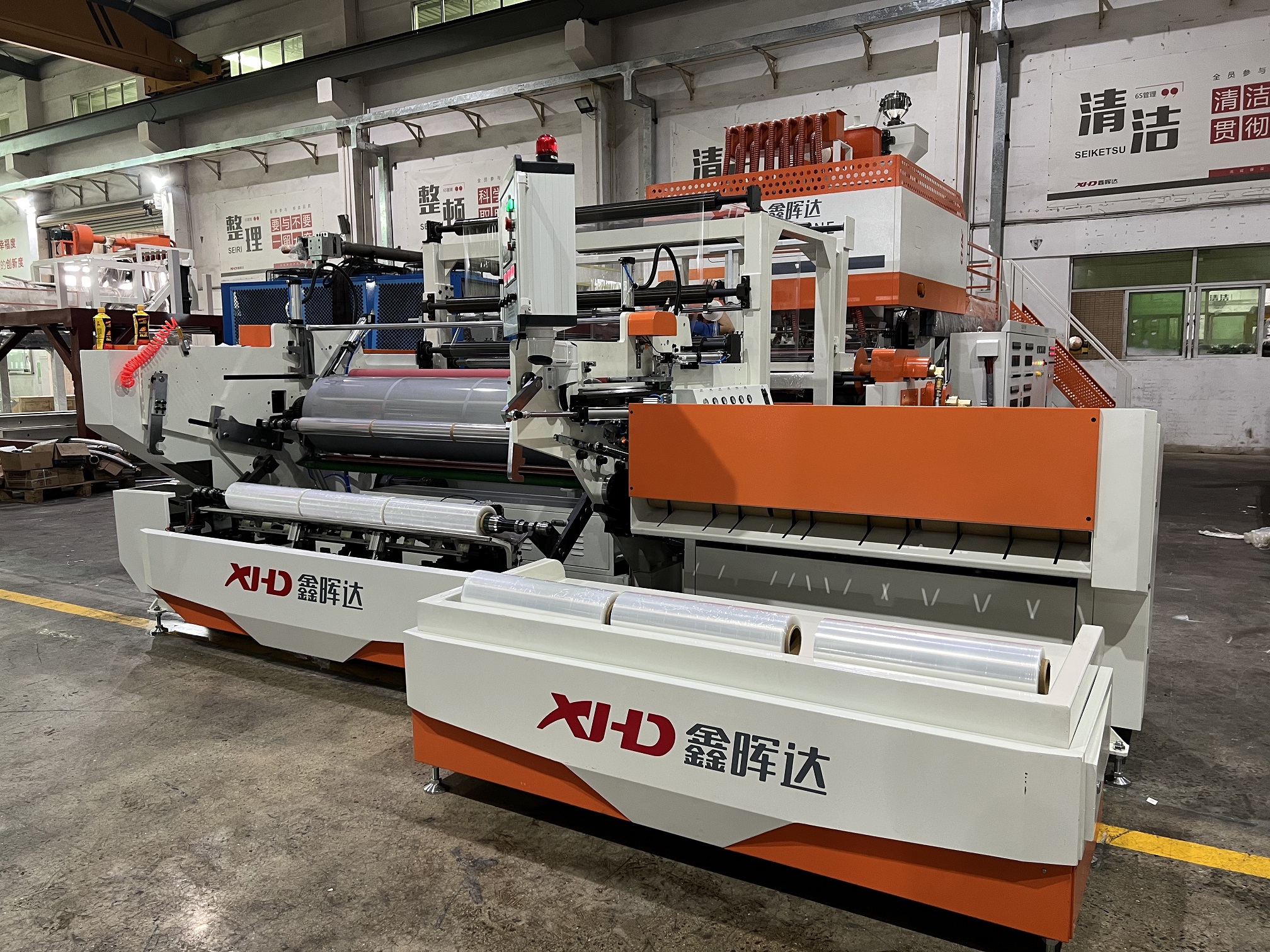
Why Invest in a Stretch Wrapping Machine?
Switching from manual wrapping to a machine might seem like a significant investment, but the benefits often lead to a rapid return on investment.
· Improved Load Security: Machines apply film with consistent tension and precision, creating a much more stable and secure load than can be achieved by hand. This drastically reduces the risk of product damage during shipping.
· Increased Efficiency: A machine can wrap a pallet in a fraction of the time it takes to do it manually. A semi-automatic wrapper can handle 20-40 loads per hour, while automatic systems can wrap over 100 loads per hour, freeing up valuable employee time.
· Reduced Material Costs: The pre-stretch capability of modern machines optimizes film usage, often cutting film costs by 50% or more compared to hand wrapping. Consistent application prevents the waste associated with uneven manual wrapping.
· Enhanced Worker Safety: Manual stretch wrapping is a physically demanding task that can lead to back injuries, dizziness, and repetitive strain. Automating the process eliminates these ergonomic risks and creates a safer work environment.
· Professional Presentation: A uniformly wrapped pallet looks more professional and signals to your customers that you take care in handling their products.
The Heart of the Machine: How is Stretch Film Manufactured?
The effectiveness of a stretch wrapping machine depends entirely on the quality of the stretch film. But how is this durable, elastic material made? The process of how to manufacture stretch film is a fascinating example of polymer science and precision engineering.
Most stretch film is made from Linear Low-Density Polyethylene (LLDPE). The manufacturing process typically uses one of two methods:
1. Cast Extrusion
This is the more common and cost-effective method.
· Melting: LLDPE resin pellets are fed into an extruder, where they are melted down into a liquid state by heat and friction.
· Extrusion: The molten polymer is then pushed through a narrow, flat die, forming a thin sheet of film.
· Cooling: This hot sheet of film is immediately passed over large, chilled rollers. The rapid cooling (or "quenching") process locks the polymer chains in place, which gives the film its excellent clarity and quiet unwind characteristics.
· Rolling: The cooled film is then trimmed to the desired width and wound onto large cardboard cores, creating the finished rolls that are used in stretch wrapping machines.
2. Blown Extrusion
This method produces a tougher, more puncture-resistant film.
· Extrusion: Similar to the cast process, LLDPE is melted and extruded. However, instead of a flat die, it is forced through a circular die, forming a tube of molten plastic.
· Inflation: Air is blown into the center of this tube, expanding it like a balloon. This "bubble" is pulled vertically up a tower, often several stories high, which stretches the film in both machine and transverse directions.
· Cooling & Collapsing: The bubble is slowly cooled by the surrounding air. Once cooled, it is collapsed and flattened.
· Rolling: The flattened tube is then slit and wound onto cores to create rolls of film. Blown film is typically hazier than cast film and produces more noise when unwound, but its superior strength makes it ideal for securing loads with sharp corners.
Leading manufacturers often blend different polymers and additives to enhance specific properties like cling, UV resistance, and puncture strength. Finding a reliable stretch film wrapping machine manufacturer is key, as they can also guide you on the best film for your specific application. Companies like Guangdong Xinhuida Machinery Technology Co., Ltd. specialize in this field, offering a range of machinery and expertise.
Making the Right Choice for Your Business
Investing in a stretch wrapping machine is a strategic move to enhance your packaging operations, reduce costs, and protect your products more effectively. By automating a labor-intensive task, you can reallocate your workforce to more value-added activities, all while ensuring your goods arrive safely at their destination.
When considering a machine, evaluate your load volume, load characteristics, and long-term business goals. Partnering with an experienced stretch film wrapping machine manufacturer can provide invaluable guidance, helping you select the right equipment and the optimal film to maximize your return on investment.
stretch film wrapping machine manufacturer
Stretch Wrapping Machine
stretch film wrapping machine manufacturer in china
 English
 العربية
 Français
 Русский
 Español
 Português
 Deutsch
 italiano
 日本語
日本語 한국어
한국어 Nederlands
 Tiếng Việt
 ไทย
ไทย Polski
 Türkçe
 ភាសាខ្មែរ
 Bahasa Melayu
 ဗမာစာ
ဗမာစာ தமிழ்
தமிழ் Filipino
 Bahasa Indonesia
 Română
 Čeština
 Монгол
 қазақ
қазақ Српски
 हिन्दी
 فارسی
فارسی Kiswahili
 Slovenčina
 українська
 Հայերեն
 Latine
 Dansk
Dansk اردو
اردو Shqip
Shqip বাংলা
বাংলা Hrvatski
 Afrikaans
 Gaeilge
 Oʻzbekcha
 latviešu
 Azərbaycan dili
 Беларуская мова
 Bosanski
 ગુજરાતી
 Basa Jawa
 Kinyarwanda
 Кыргызча
 Македонски
 Malti
Malti


