
Views: 0 Author: Site Editor Publish Time: 2025-10-08 Origin: Site


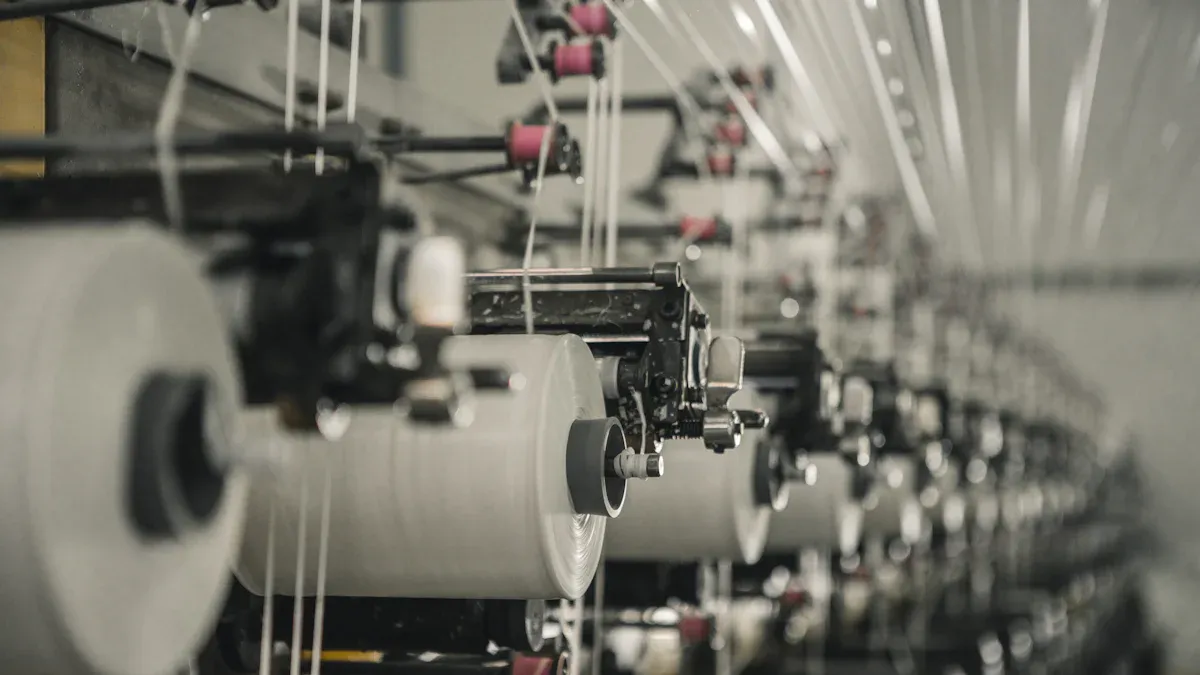
A CPE CASTING FILM LINE lets you create transparent, high-quality polyethylene films using advanced technology like automatic thickness control and multilayer co-extrusion. Over the past five years, you have seen a sharp rise in demand for these films because industries want more sustainable packaging. Governments encourage eco-friendly solutions, and new technology now allows recycled materials in film production.
The global market size for CPE casting film lines reached USD 1.5 billion in 2023.
Experts expect it to grow to USD 2.7 billion by 2032, with a 6.5% CAGR.
You use a CPE CASTING FILM LINE to produce high-quality polyethylene films. This system combines advanced machinery and technology to create films with excellent clarity and strength. The main function of a CPE CASTING FILM LINE is to melt polyethylene pellets, shape them into thin sheets, and cool them quickly. You can rely on this process to deliver films that meet strict standards for packaging and industrial use.
Tip: If you want consistent film quality, you should choose a CPE CASTING FILM LINE with automatic thickness control and precise temperature management.
A CPE CASTING FILM LINE includes several important parts. Each part plays a key role in making sure the film meets your requirements.
The extruder melts the polyethylene pellets. You feed the raw material into the extruder, and it heats and mixes the pellets until they become a uniform molten mass. The extruder controls the temperature and pressure, which helps you achieve the right film properties.
The casting unit shapes the molten polyethylene into a thin, flat sheet. You guide the melted material onto a smooth, moving surface called a casting roll. The casting unit determines the initial thickness and width of the film.
The cooling system rapidly lowers the temperature of the hot film. You use chilled rolls or air to cool the film, which helps lock in clarity and strength. Fast cooling prevents defects and keeps the film smooth.
The winding system collects the finished film onto rolls. You set the winding speed and tension to avoid wrinkles or uneven layers. This system makes it easy for you to store, transport, or process the film further.
You can choose from several types of polyethylene when operating a CPE CASTING FILM LINE. Each type offers unique properties that affect the final film.
| Type of Polyethylene | Properties |
|---|---|
| LLDPE | Good toughness, tensile strength, and puncture resistance. Common grades: C4, C6, C8. C8 and mLLDPE have better performance. |
| VLDPE | Increases flexibility and tackiness. |
| PIB | Good effects but has migration issues affecting adhesive stability and transparency. |
| EVA | Less tackifying effect than PIB but has less migration and good transparency. |
You often select LLDPE for its toughness and strength. VLDPE gives you more flexibility and stickiness, which is useful for stretch films. PIB can improve certain properties, but you need to watch for migration issues. EVA provides good transparency and stable adhesion, making it a popular choice for packaging.
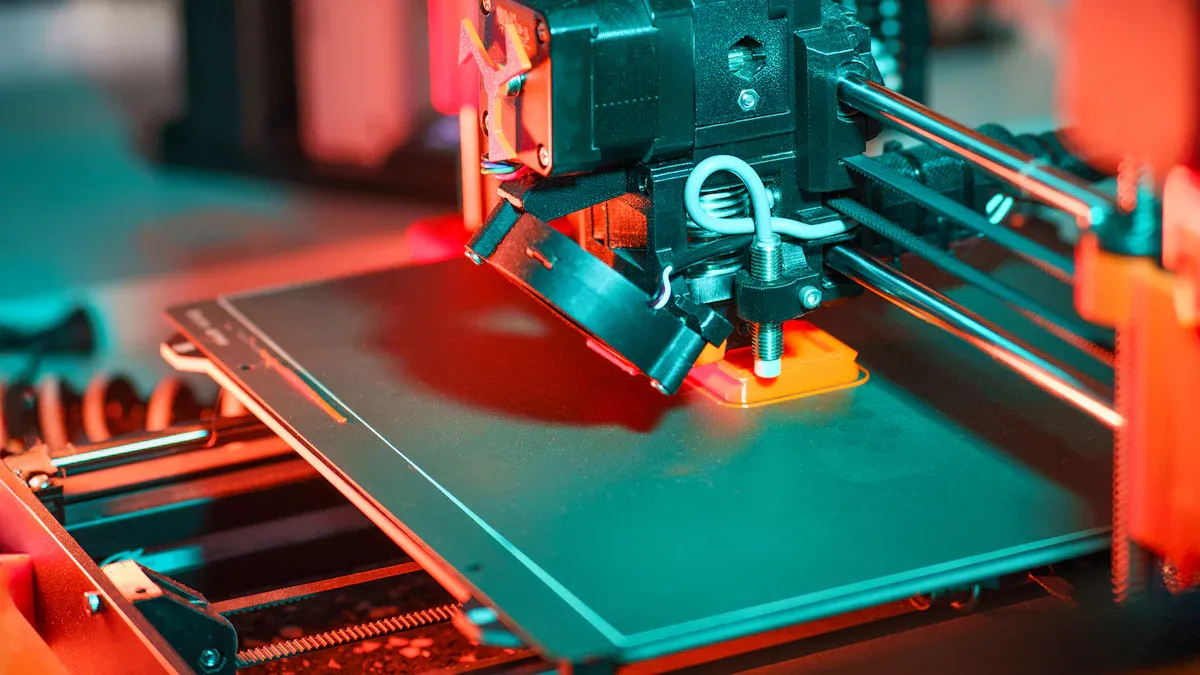
You start the CPE CASTING FILM LINE by preparing the raw materials. You select plastic pellets, usually polyethylene, and make sure they are clean and dry. Drying the pellets removes moisture, which helps prevent defects in the finished film. Mixing the pellets ensures you get a uniform blend, which is important for consistent film quality.
Tip: Always check the moisture content before feeding the pellets. Moist pellets can cause bubbles and weaken the film.
You load the prepared pellets into the hopper. The system uses automatic feeders to move the pellets into the extruder. This step sets the foundation for the entire process.
Once you feed the pellets, the extruder takes over. The extruder heats and melts the pellets using high temperatures and strong mechanical force. You control the temperature and pressure to get the right melt quality. The extruder mixes the material until it becomes a smooth, molten mass.
Filtration systems inside the extruder remove impurities. This step helps you achieve a clear and strong film. Advanced PLC technology lets you adjust the temperature and speed with precision. You can monitor the process in real time and make changes quickly.
High plasticizing capability improves how the material melts.
Energy-saving features help you lower production costs.
PLC control allows you to adjust film thickness and speed easily.
After extrusion, you guide the molten polyethylene to the casting unit. The casting unit uses a flat die to shape the material into a thin, wide curtain. You rely on electronic ceramic components for precise temperature control. These components keep the temperature stable, which helps you form a uniform film.
The molten film lands on a chill roll, which cools and solidifies it quickly. Fast cooling locks in clarity and strength. You use advanced systems to control the speed and tension, making sure the film stays smooth and even.
Note: Stable and fast operation depends on high-quality electronic ceramic parts. These parts help you avoid defects and maintain film quality.
You need precise thickness control to produce high-quality polyethylene films. The automatic thickness control system in a CPE CASTING FILM LINE manages and regulates film thickness with advanced technology. This system uses sensors and precision instruments to monitor the film as it forms. You can adjust the settings in real time using the control panel. Even small changes in thickness can affect product quality, so you must pay close attention during this step.
Tip: Consistent thickness helps you minimize waste and improve the overall production process. Automatic systems let you maintain strict standards without constant manual checks.
You rely on these systems to deliver films that meet the demands of packaging and industrial applications. When you use automatic thickness control, you get reliable results and reduce the risk of defects.
You shape the molten polyethylene into a film using several critical parameters. The chill roll temperature plays a major role in determining the film’s clarity, strength, and shrinkage. You set the vacuum box or air knife to control the film’s final quality. Edge pinning systems help you keep the film stable as it cools.
Here is a table showing how each parameter affects film quality:
| Parameter | Effect on Film Quality |
|---|---|
| Chill roll temperatures | Directly affects optical and mechanical properties such as haze, transparency, tensile strength, and shrinkage. |
| Vacuum box or air knife settings | Influences the final product quality significantly. |
| Edge pinning systems | Ensures solid contact between film edges and chill roll, enhancing film stability. |
You monitor these settings closely to make sure the film forms correctly. If you set the chill roll temperature too high, you may see more haze or weaker films. If you use the vacuum box or air knife properly, you improve the film’s surface and reduce defects. Edge pinning keeps the film flat and prevents curling at the edges.
You use corona treatment to improve the surface properties of polyethylene films. This process exposes the film to a high-frequency electrical discharge, which creates plasma on the surface. The plasma interacts with the film, causing oxidation and forming polar groups. These changes increase the surface energy and make the film more hydrophilic.
When you treat the film with corona, you enhance its wettability and adhesion. This is important if you plan to print on the film or apply adhesives. Research shows that films treated with corona and chemical co-treatment can maintain stable surface energy levels for over 150 days. Untreated films lose surface energy much faster.
Note: Corona treatment leads to better adhesive properties and improved wettability, especially for linear low-density polyethylene films. You get stronger bonds and more reliable results in packaging and laminating applications.
You can adjust the corona treatment settings to match your needs. By controlling the intensity and duration, you achieve the right balance between surface energy and film performance.
You reach the edge cutting stage after forming and treating the film. Edge cutting helps you remove uneven or excess material from both sides of the polyethylene film. This step ensures that the film has a clean, straight edge, which is important for further processing and packaging.
You use sharp blades or rotary cutters to trim the film edges. These tools move along the sides of the film as it passes through the line. You can adjust the position and sharpness of the blades to match the film width and thickness. Modern systems let you set the cutting width with high precision using digital controls.
Tip: Regularly check the blade condition. Dull blades can cause rough edges or tearing, which affects the final product quality.
Edge cutting also helps you recycle trimmed material. You can collect the scraps and feed them back into the extruder, reducing waste and saving costs. Clean edges make winding and packaging easier, and they improve the appearance of the finished rolls.
Here is a quick overview of edge cutting benefits:
| Benefit | Description |
|---|---|
| Clean edges | Improves roll appearance and handling |
| Consistent width | Ensures uniformity for packaging and laminating |
| Waste reduction | Allows recycling of trimmed material |
| Process efficiency | Speeds up winding and downstream operations |
You move to automatic winding after edge cutting. Automatic winding collects the finished film onto rolls with consistent tension and speed. This step is crucial for packaging, storage, and transportation.
You rely on advanced mechanical structures and precise control systems to wind the film quickly and accurately. Automatic winding in a CPE CASTING FILM LINE boosts efficiency by allowing you to package many items rapidly. The system uses sensors and programmable logic controllers (PLC) to monitor roll diameter, tension, and speed. You can set the parameters for different film types and thicknesses.
Note: Automatic winding ensures stable packaging quality. High-quality materials and uniform winding strength make the rolls reliable and visually appealing.
You avoid wrinkles, uneven layers, and loose ends by using automatic winding. The system can switch rolls automatically when one is full, so you do not need to stop production. This feature saves time and reduces labor costs.
Here are some key advantages of automatic winding:
Fast and accurate winding improves overall packaging efficiency.
Uniform tension prevents defects and maintains roll quality.
Automated roll change reduces downtime and increases productivity.
Consistent winding strength enhances reliability and aesthetics.
You finish the process with rolls that are ready for shipment or further processing. Automatic winding helps you meet high production standards and deliver quality films to your customers.
You benefit from advanced automation features when you operate a modern CPE CASTING FILM LINE. Automation helps you improve efficiency and reduce manual errors. The system uses sensors and controllers to manage each step of the process. You can rely on automatic feeders, winding machines, and thickness gauges to keep production running smoothly.
Here is a table showing some standard automation features:
| Feature Description | Details |
|---|---|
| High precision extrusion pressure closed loop control | Maintains a constant extrusion output |
| Multicavity flow channel automatic die head | Solves uneven lateral spread caused by different material flow |
| Automatic thickness gauge system | Ensures even thickness of films |
| Interlace spiral flow channel design of casting roll | Reduces surface temperature errors, improving thin film quality |
| Full-automatic double-station winding machine | Adjustable coiling modes (gap or winding contact) |
| Winding tension closed-loop control | Guarantees constant tension with automatic conical degree calculation |
| Remote diagnosis module | Facilitates convenient equipment maintenance |
You can adjust settings with a digital control panel. The remote diagnosis module lets you troubleshoot problems quickly. Automation saves you time and helps you produce films with consistent quality.
Tip: Automated systems reduce downtime and make maintenance easier. You spend less time fixing issues and more time producing high-quality films.
Precision control gives you the ability to produce films with exact thickness and uniformity. You use sensors and automated systems to monitor film thickness in real time. This technology helps you avoid defects and meet strict quality standards.
Maintaining consistent thickness is important for product protection and customer satisfaction. You can see how precision control impacts film quality in the table below:
| Practice | Benefit |
|---|---|
| Automated thickness monitoring | Real-time adjustments during production |
| Accurate measurement tools | Ensures compliance and quality control |
| Quality control systems | Detects deviations and prevents faulty products |
You set the desired thickness on the control panel. The system makes adjustments automatically if it detects any changes. This process helps you deliver reliable products for packaging and industrial use.
Note: Precision control systems help you minimize waste and improve production efficiency. You get films that meet your customers’ needs every time.
Multilayer co-extrusion allows you to create films with multiple layers, each with different properties. You use a co-extrusion die head to combine materials and form up to 72 layers in a single film. This feature gives you flexibility to adjust thickness, strength, and barrier properties.
Here is a table showing key technical specifications:
| Component | Description |
|---|---|
| Die Head (Co-extrusion) | Designed for single-layer or multi-layer film production, up to 72 layers |
| Multiplier (Multilayer Die) | Enables production of films with multiple layers for different functional purposes |
| Cooling Rolls | Cools and solidifies the film, controlling thickness and surface properties |
| Metering Pumps | Ensures accurate feeding of materials into the extrusion system |
| Digital Control System | Manages parameters like temperature and pressure for consistent film quality |
| Production Efficiency | High-speed production while maintaining uniformity and quality |
| Customizable Film Properties | Flexibility in adjusting layers, thickness, and barrier properties based on product requirements |
You start by preparing raw materials and mixing additives. The extruder melts the materials and pushes them through the co-extrusion die. Cooling rolls solidify the film quickly. The winding unit collects the finished film with automatic tension control.
Tip: Multilayer co-extrusion lets you create films for special applications, such as food packaging or industrial use. You can customize each layer to meet specific requirements.
You achieve high production speeds and energy efficiency with this technology. The CPE CASTING FILM LINE gives you the tools to produce advanced films for a wide range of uses.
You want every film you produce to meet strict standards. Quality assurance in a CPE CASTING FILM LINE covers each step, from raw material selection to final inspection. You use advanced systems to monitor and control the process, so you can catch problems early and avoid costly mistakes.
You rely on several measures to keep film quality high. Here is a table showing how each system works:
| Quality Assurance Measure | Description |
|---|---|
| Corrosion-resistant Material Application and Monitoring System | Utilizes special alloys and coatings for components, with real-time monitoring for corrosion detection. |
| Chemical Substance Cleaning and Purification System | Employs eco-friendly cleaning agents and exhaust purification to ensure no chemical residues remain. |
| Raw Material Purity Optimization System | Implements multi-stage filtration and drying to ensure high purity of raw materials. |
| Mirror-surface Molding and Surface Treatment System | Uses high-precision rolls for smooth film surfaces and applies special coatings for enhanced gloss. |
| Solvent-free Raw Material Conveying and Handling System | Ensures no solvents are introduced during raw material handling, maintaining purity. |
| Exhaust Gas and Waste Purification and Treatment System | Collects and purifies exhaust gases to meet environmental standards and recycles waste. |
You check the purity of raw materials before you start production. Multi-stage filtration and drying remove impurities and moisture. You use corrosion-resistant materials for machine parts, so you avoid breakdowns and keep the line running smoothly. You clean and purify the system with eco-friendly agents, which helps you protect the environment and your workers.
You shape the film with mirror-surface rolls. These rolls give your film a smooth finish and extra gloss. You also use special coatings to improve appearance and performance. You keep solvents out of the process, so your films stay pure and safe for packaging. You collect and treat exhaust gases, so you meet environmental standards and recycle waste.
Tip: Regular checks and real-time monitoring help you catch problems early. You save time and money by preventing defects before they reach your customers.
You want to save energy and lower costs when you run a CPE CASTING FILM LINE. Modern systems use advanced technology to cut energy use by up to 30% compared to older methods. You get more control over the process, so you waste less power and raw material.
Here is a table comparing energy efficiency features:
| Feature | CPE Casting Film Lines | Traditional Film Production |
|---|---|---|
| Energy Savings | Up to 30% | N/A |
| Precision Control | Yes | No |
| Advanced Technology | Yes | Limited |
You use precision control to adjust temperature, speed, and thickness. This helps you avoid overheating and reduces energy waste. You rely on sensors and digital systems to keep everything running at the right level. You also benefit from faster cooling and winding, which means you use less electricity for each roll you produce.
You choose a CPE CASTING FILM LINE because it helps you meet your sustainability goals. You use less energy, create less waste, and produce high-quality films for packaging and industrial use.
Note: Energy-efficient systems help you lower your carbon footprint and save money. You can invest those savings in new technology or expand your business.
You want your polyethylene films to look clear and bright. High clarity helps you showcase products and makes packaging more attractive. When you use a CPE CASTING FILM LINE, you get films with excellent transparency. The advanced cooling system and precise temperature control keep the film smooth and free from haze. You can see the difference when you compare these films to older types. Clear films let you display food, electronics, or clothing without hiding the details. Customers trust packaging that looks clean and professional.
Tip: Choose the right chill roll temperature to boost clarity and reduce cloudiness in your finished film.
You need films with even thickness for reliable packaging and protection. Consistent thickness means your film will not tear easily and will wrap products smoothly. The CPE CASTING FILM LINE uses an auto thickness controlling system and an efficient chill roll. These features help you keep the film uniform from edge to edge. Gravimetric batch dosing systems also play a role. They measure and add resin components with high accuracy. This process gives you repeatable results every time you run the line. You avoid problems like weak spots or uneven layers. Your customers get packaging that works well and lasts longer.
Note: Uniform thickness saves you money because you waste less material and reduce the risk of product damage.
You can use CPE casting film lines for many different applications. These lines help you meet the needs of various industries. Here are some reasons why they are so versatile:
You can produce films for food packaging, medical supplies, and protective coverings.
The films combine strength and flexibility, which helps you protect products during shipping and storage.
Superior barrier properties keep out moisture and oxygen, so your products stay fresh and safe.
You can choose sustainable and recyclable films, which makes your brand more eco-friendly.
You have the freedom to adjust film properties for each project. You can change thickness, add layers, or select special additives. This flexibility lets you create packaging for snacks, electronics, or even medical devices. You can respond quickly to market changes and customer requests.
Block Quote: Versatile film lines help you stay ahead in a fast-changing industry. You can offer new solutions and reach more customers.
You gain a competitive edge when you use a CPE CASTING FILM LINE. You deliver high-quality films for many uses and support sustainability goals.
You need packaging films that can handle heavy loads without tearing or stretching. When you use a CPE CASTING FILM LINE, you get polyethylene films with impressive load-bearing strength. These films support bulky items, sharp-edged products, and stacked goods during shipping and storage. You can trust them to protect your products from damage.
Manufacturers design these films with advanced resin blends and multilayer structures. You benefit from high tensile strength and puncture resistance. The films do not split or break under pressure. You can wrap pallets, boxes, or industrial parts with confidence.
Here are some reasons why heavy load capacity matters for your business:
You reduce the risk of product loss during transport.
You save money on replacements and returns.
You improve customer satisfaction by delivering intact goods.
Tip: Choose films with reinforced edges and optimized thickness for maximum strength. You can adjust these settings on your CPE CASTING FILM LINE to match your needs.
You can see the difference in performance when you compare heavy-duty films to standard packaging. Heavy load films stretch less and hold their shape better. You avoid problems like sagging, tearing, or punctures.
The table below shows how heavy load capacity benefits different industries:
| Industry | Application | Benefit |
|---|---|---|
| Logistics | Pallet wrapping | Prevents shifting and damage |
| Agriculture | Bulk produce packaging | Protects from punctures |
| Manufacturing | Machinery parts wrapping | Handles sharp edges |
| Retail | Large item packaging | Maintains product integrity |
You can customize film thickness, width, and resin type for each application. The CPE CASTING FILM LINE lets you produce films that meet strict load requirements. You can run tests to check tensile strength and elongation. These tests help you guarantee that your films will perform under stress.
You also benefit from films that resist environmental factors. Heavy load films stay strong in cold, hot, or humid conditions. You do not need to worry about film failure due to temperature changes or moisture.
Block Quote: Strong films protect your products and your reputation. You can rely on heavy load capacity to deliver safe, secure packaging every time.
You gain a competitive edge when you offer packaging that stands up to tough demands. Customers notice the difference in quality and reliability. You build trust by using films that do not let you down.
You see CPE casting film lines used widely in the food packaging industry. These films help you keep food fresh and safe. You can pack many types of food with these films because they offer strong protection and high clarity. Here are some common uses:
Packing frozen food
Making vacuum packing bags
Packaging pasteurized milk
Wrapping electronic parts
You rely on these films for frozen foods because they resist moisture and cold temperatures. You use vacuum packing bags to keep air out and extend shelf life. Pasteurized milk stays fresh longer when you use CPE films. You also find these films useful for electronic parts packaging, which shows their versatility.
Tip: Choose films with good barrier properties to keep food safe from moisture and oxygen.
You benefit from the transparency of these films. Customers can see the product inside, which builds trust and helps you sell more.
You use CPE casting film lines to create packaging solutions for clothing. These films offer high transparency, so your customers can see the garments clearly. You get better control over thickness, which means your packaging looks neat and professional. The high output capacity of these lines lets you produce more bags in less time.
Here is a table showing the main benefits:
| Benefit | Description |
|---|---|
| High Transparency | You get superior clarity compared to blown films. |
| Thickness Variation | You control thickness more precisely, improving product appearance. |
| High Output Capacity | You produce more packaging quickly, boosting efficiency. |
You use CPE composite base film for laminating and heat sealing. This makes your packaging strong and easy to close. You find these films in bags for clothing packaging because they combine technical properties with attractive looks. You choose CPE films for clothing because they help you protect garments and present them well.
Note: High transparency and smooth surfaces make your clothing packaging stand out in stores.
You use CPE casting film lines to produce base films for laminating. Laminating helps you add extra strength and protection to packaging materials. You combine CPE films with other layers to create multi-functional packaging. You can heat seal these films, which makes them ideal for many types of bags and pouches.
You benefit from the flexibility of CPE films in laminating. You adjust thickness and add special coatings to meet different needs. You use laminated films for food, clothing, and industrial products. Laminated packaging resists moisture, tearing, and punctures, so your products stay safe during shipping and storage.
Block Quote: Laminating with CPE films gives you packaging that lasts longer and looks better.
You choose a CPE CASTING FILM LINE when you need reliable, high-quality films for laminating. You get consistent results and meet the demands of many industries.
You find CPE casting film lines essential in many industrial settings. These lines help you produce polyethylene films that meet strict requirements for quality and performance. You use these films for surface protection, laminating, and other demanding tasks.
Many industries rely on polyethylene films to protect valuable surfaces. You can cover metal sheets, glass panels, and electronic components with these films. The films shield products from scratches, dust, and moisture during storage and transport. You also use them as release liners in manufacturing processes. These liners prevent adhesives from sticking before you need them.
You benefit from the excellent transparency of CPE films. Clear films let you inspect surfaces without removing the protective layer. You can spot defects or damage quickly. This feature saves you time and reduces waste.
Low gauge variation is another advantage. You get films with consistent thickness across the entire roll. This uniformity ensures reliable performance in automated production lines. Machines run smoothly when you use films with stable dimensions. You avoid jams and costly downtime.
Here is a table that highlights key characteristics of CPE casting film lines in industrial applications:
| Characteristic | Description |
|---|---|
| Transparency | Good transparency, making it suitable for laminating and surface protection. |
| Gauge Variation | Low gauge variation, ensuring consistent quality in production. |
| Industrial Applications | Ideal for applications such as laminating and surface protection in various industries. |
You use CPE films for laminating because they bond well with other materials. You can create multi-layer structures that combine strength, flexibility, and barrier properties. These laminated films serve in packaging, construction, and automotive industries.
Surface protection is a major use. You apply CPE films to finished products before shipping. The films peel off easily without leaving residue. You keep products looking new and avoid costly repairs.
Tip: Choose CPE films with low gauge variation for automated processes. Consistent thickness helps you maintain high production speeds and reduces machine wear.
You also find these films useful in electronics manufacturing. You wrap sensitive components to prevent static buildup and contamination. The films resist chemicals and withstand temperature changes.
Many factories prefer CPE casting film lines because they offer high output and flexibility. You can adjust film properties to match your specific needs. You select thickness, width, and additives for each application.
You improve efficiency and product quality by using CPE casting film lines in your industrial operations. These films help you protect surfaces, streamline production, and meet customer expectations. You gain a reliable solution for many industrial challenges.
You need to look at several important factors before you select a CPE casting film line. Each factor affects how well the machine fits your production needs. Start by checking the output capacity. You want a line that matches your daily or monthly production goals. Next, review the film width and thickness range. Make sure the line can produce films that meet your packaging requirements.
You should also consider the level of automation. Advanced automation helps you reduce errors and save labor costs. Look for systems with automatic thickness control and real-time monitoring. Energy efficiency matters too. Choose a line that uses less power and helps you lower operating costs.
Here is a table to help you compare key factors:
| Factor | Why It Matters |
|---|---|
| Output Capacity | Meets your production targets |
| Film Width/Thickness | Matches your product specifications |
| Automation Level | Improves efficiency and reduces errors |
| Energy Efficiency | Lowers costs and supports sustainability |
| Material Compatibility | Handles different polyethylene types |
Tip: Always ask for a demo or visit the manufacturer’s facility. You can see the machine in action and check if it meets your standards.
You may need a CPE casting film line that fits your unique business needs. Customization lets you adjust the machine to produce special films or handle different materials. You can choose the number of layers for co-extrusion. Some lines let you add extra cooling rolls or advanced winding systems.
You might want to include special features like remote monitoring or digital control panels. These upgrades help you track production and make quick changes. You can also select different die heads to create films with unique properties.
Here are some common customization options:
Multilayer co-extrusion for advanced barrier films
Adjustable film width and thickness
Special resin feeders for additives
Enhanced cooling and winding systems
Digital control and remote diagnostics
Block Quote: Customization gives you flexibility. You can respond to market changes and offer new products faster.
You should talk to the supplier about your specific needs. Ask if they can design a line that matches your production goals and product types.
You need to keep your CPE casting film line in good condition. Regular maintenance helps you avoid breakdowns and keeps production running smoothly. Start by following the manufacturer’s maintenance schedule. Clean the extruder and casting rolls often. Check the blades and winding system for wear.
You should inspect sensors and control panels. Make sure they work correctly. Replace worn parts before they cause problems. Lubricate moving parts to reduce friction and extend machine life.
Here is a simple maintenance checklist:
Clean extruder and casting rolls weekly
Inspect blades and winding system
Test sensors and control panels
Replace worn parts promptly
Lubricate moving parts regularly
Note: Good maintenance saves you money. You avoid costly repairs and keep your film quality high.
You can train your staff to handle basic maintenance tasks. Ask the supplier for support or remote diagnostics if you need help. Well-maintained machines last longer and help you deliver reliable products.
You see how a CPE CASTING FILM LINE brings advanced technology and automation to polyethylene film production. You gain high clarity, consistent thickness, and strong films for many uses. You can improve your packaging, protect products, and boost efficiency. If you want reliable results, you should explore this solution. New innovations will help you create even better films in the future.
You get high-quality polyethylene films with excellent clarity and strength. The system uses advanced technology to ensure consistent thickness and reliable performance for packaging and industrial applications.
You rely on automatic thickness control systems. Sensors monitor the film during production. You adjust settings in real time to keep thickness uniform and reduce waste.
Yes, you can use recycled polyethylene pellets. Modern lines support recycled materials. You help reduce environmental impact and meet sustainability goals.
You often choose LLDPE for toughness and strength. VLDPE adds flexibility. EVA improves transparency. You select the type based on your product needs.
Tip: Test different blends to find the best performance for your application.
You check sensors and control panels first. Clean the extruder and casting rolls. Replace worn blades. Use the remote diagnosis module for quick support.
| Issue | Solution |
|---|---|
| Uneven thickness | Adjust thickness gauge |
| Wrinkles | Check winding tension |
You wear protective gloves and goggles. Keep hands away from moving parts. Follow the manufacturer’s safety guidelines. Train your team on emergency procedures.
Note: Regular safety checks help prevent accidents and keep your workplace secure.


