Plastic film rewinders are essential machines in the production process, primarily used to wind plastic films into neat, consistent rolls for storage, transportation, or further processing. They play a key role in ensuring the quality and efficiency of production lines, particularly in industries such as packaging, printing, and manufacturing. When selecting a plastic film rewinder, businesses often face the decision between manual and automatic models. Manual rewinders are simpler, more affordable, and suited for small-scale operations, while automatic rewinders offer faster speeds, higher precision, and less labor involvement, making them ideal for high-volume production. The choice between these models depends on various factors, such as production volume, budget, and efficiency requirements. Selecting the right rewinder is crucial for optimizing production, minimizing costs, and ensuring consistent film quality.
Manual Plastic Film Rewinders
1.How Manual Rewinders Work
Manual plastic film rewinders operate through hand-cranked or semi-automated controls, requiring direct human involvement to wind the plastic film onto rolls. In a typical manual setup, the operator feeds the film through the machine, adjusting the tension and alignment as the film is wound. Some models feature semi-automated controls, where the operator adjusts settings like tension or speed manually but the machine takes care of the winding process. These machines are simple to operate but rely heavily on human intervention for consistent results.
2.Advantages of Manual Rewinders
Lower Upfront Cost: Manual rewinders are typically less expensive than automatic models, making them an affordable choice for businesses with budget constraints.
Simple to Use: These machines have fewer technical requirements and are easy to operate, making them suitable for small businesses or operations with less technical expertise.
Ideal for Small-Scale Operations: Manual rewinders are well-suited for low-volume production runs where flexibility and cost savings are priorities.
3.Disadvantages of Manual Rewinders
Slower Production Speed: Manual rewinders generally operate at slower speeds compared to automatic machines, limiting the throughput of film production.
Higher Labor Costs and Human Error: Since manual models require more operator involvement, they can increase labor costs and are prone to human error, which can affect the consistency of the final product.
Limited Scalability: As production volume increases, manual rewinders may not be able to keep up with demand, making them less suitable for high-volume or large-scale operations.
Automatic Plastic Film Rewinders
1.How Automatic Rewinders Work
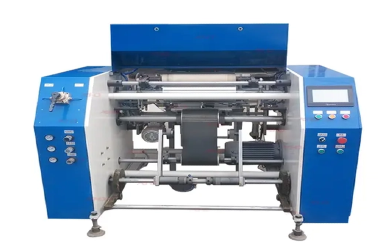
Automatic plastic film rewinders operate through advanced automated processes that control key parameters such as tension, speed, and alignment. These machines are equipped with sensors and programmable controls that ensure precise winding without manual intervention. The system continuously adjusts tension to maintain uniformity in film rolls and can automatically modify the speed and alignment as needed to optimize the winding process. This automation reduces the reliance on operators and ensures that each roll is produced consistently and efficiently.
2.Advantages of Automatic Rewinders
Increased Speed and Efficiency: Automatic rewinders operate much faster than manual models, allowing for higher throughput and enabling manufacturers to meet high production demands.
Minimal Human Intervention: With advanced controls, automatic rewinders require less direct labor involvement, reducing human error and labor costs. Operators only need to monitor the process rather than actively manage it.
Greater Precision and Consistency: These machines offer higher precision in film winding, ensuring consistent roll quality and uniformity. This is especially important for industries requiring high-quality, defect-free products.
Suitable for High-Volume Production: Automatic rewinders are ideal for large-scale, high-volume production environments where speed, consistency, and minimal human intervention are essential.
3.Disadvantages of Automatic Rewinders
Higher Initial Investment: The advanced technology and automation in these machines make them more expensive upfront compared to manual models.
Requires More Technical Knowledge: Operating and maintaining automatic rewinders requires more technical expertise. Operators must be trained to adjust settings, troubleshoot, and manage the automated systems effectively.
Higher Maintenance Costs: Due to their complexity, automatic rewinders can have higher maintenance costs. The intricate components, such as sensors and motors, may require specialized repairs and servicing.
Key Differences Between Manual and Automatic Plastic Film Rewinders
1. Production Speed
Manual plastic film rewinders typically operate at slower speeds compared to automatic models. Since manual models require more operator involvement and adjustments during the winding process, they can only handle lower volumes at a time. In contrast, automatic rewinders offer higher speeds and greater throughput, making them suitable for large-scale, high-volume production. The automation of key functions in automatic models allows them to work continuously without the need for frequent stops, increasing overall productivity.
2. Cost
One of the main advantages of manual rewinders is their lower upfront cost, making them an affordable choice for small businesses or those with limited budgets. However, automatic rewinders come with a higher initial investment due to their advanced technology and automation features. Despite the higher cost, automatic models often provide greater long-term efficiency, reducing labor costs and minimizing downtime, which can result in better cost-effectiveness over time for businesses with high production demands.
3. Labor Requirements
Manual rewinders require more manual labor as operators are responsible for adjusting settings, monitoring the winding process, and making real-time adjustments. This can lead to higher labor costs and potential for human error. On the other hand, automatic rewinders significantly reduce the need for human intervention. With automated processes controlling speed, tension, and alignment, automatic models minimize labor requirements and reduce the likelihood of mistakes, which can improve overall operational efficiency and reduce labor costs.
4. Precision and Consistency
Automatic plastic film rewinders excel in maintaining consistent film quality. Thanks to advanced sensors and controls, they ensure uniform tension, speed, and alignment throughout the entire rewinding process, leading to higher precision and consistent results. In contrast, manual models may have more variability in film quality due to the reliance on human involvement. Even slight inconsistencies in tension or alignment can lead to uneven winding, wrinkles, or other defects, affecting the final product quality.
Choosing the Right Rewinder for Your Needs
When selecting a plastic film rewinder, it’s essential to consider several factors to ensure the machine meets your production requirements. Here are the key factors to evaluate:
1. Production Volume
Small-scale operations may benefit from a manual rewinder, as these models are more cost-effective and suitable for lower-volume production.
For large-scale operations with high production demands, an automatic rewinder is ideal, as it offers higher speeds, greater throughput, and consistent results, making it more efficient for high-volume production.
2. Budget Constraints
Manual rewinders have a lower upfront cost, making them a budget-friendly choice for businesses with limited capital or smaller production volumes.
Automatic rewinders have a higher initial cost but offer long-term efficiency, reducing labor and operational costs. If budget permits and long-term savings are a priority, an automatic model can provide better value over time.
3. Labor Resources
If you have a small workforce or limited technical expertise, a manual rewinder might be a better option due to its simpler operation and lower skill requirements.
Automatic rewinders, while requiring more specialized knowledge for operation and maintenance, reduce the need for labor by automating key functions, making them a better fit for businesses with skilled operators or larger labor forces.
4. Desired Product Quality
For businesses that require high precision and consistent film quality, automatic rewinders excel due to their ability to maintain uniform tension, speed, and alignment.
Manual rewinders may show more variability in film quality due to human involvement, making them less ideal for high-quality, precise applications.
FAQ Section
Q1: Which type of rewinder is best for small businesses or low-volume production?
A1: Manual rewinders are ideal for small businesses or low-volume production due to their lower cost and simple operation. They are well-suited for businesses with limited production needs.
Q2: Can an automatic rewinder reduce labor costs?
A2: Yes, automatic rewinders require minimal human intervention, significantly reducing labor costs and the potential for human error, which is particularly beneficial in high-volume operations.
Q3: Is the maintenance of an automatic rewinder more complex than a manual one?
A3: Yes, automatic rewinders typically have more complex components, which can require specialized knowledge for maintenance and repair. Manual rewinders, on the other hand, are simpler and easier to maintain.
Q4: How does production speed differ between manual and automatic rewinders?
A4: Automatic rewinders operate at significantly higher speeds, allowing for greater throughput and efficiency, while manual rewinders are slower and require more time to process film rolls.
Conclusion
In conclusion, the decision between a manual and automatic plastic film rewinder hinges on the unique needs of your business. Manual rewinders are a cost-effective choice for smaller, low-volume operations, offering a more affordable initial investment. However, they come with slower production speeds and greater reliance on human labor, which can increase operational costs over time. On the other hand, automatic rewinders provide significantly higher production speeds, enhanced precision, and consistency in film quality, making them ideal for large-scale, high-volume production. While they come with a higher upfront cost and require more technical expertise to operate and maintain, the long-term efficiency, reduced labor requirements, and improved quality often make them a worthwhile investment for businesses with high production demands. Ultimately, it's essential to weigh factors like production volume, budget, and desired product quality to determine which rewinder best meets your needs, ensuring optimal efficiency and long-term success in your operations.
 English
 العربية
 Français
 Русский
 Español
 Português
 Deutsch
 italiano
 日本語
日本語 한국어
한국어 Nederlands
 Tiếng Việt
 ไทย
ไทย Polski
 Türkçe
 ភាសាខ្មែរ
 Bahasa Melayu
 ဗမာစာ
ဗမာစာ தமிழ்
தமிழ் Filipino
 Bahasa Indonesia
 Română
 Čeština
 Монгол
 қазақ
қазақ Српски
 हिन्दी
 فارسی
فارسی Kiswahili
 Slovenčina
 українська
 Հայերեն
 Latine
 Dansk
Dansk اردو
اردو Shqip
Shqip বাংলা
বাংলা Hrvatski
 Afrikaans
 Gaeilge
 Oʻzbekcha
 latviešu
 Azərbaycan dili
 Беларуская мова
 Bosanski
 ગુજરાતી
 Basa Jawa
 Kinyarwanda
 Кыргызча
 Македонски
 Malti
Malti


