
Views: 0 Author: Site Editor Publish Time: 2025-09-23 Origin: Site


Efficient packaging operations require more than speed and reliability; they demand a strategic approach to material management. A stretch film machine equipped with pre-stretch technology offers a measurable way to control costs while ensuring consistent load stability. By stretching film before it reaches the pallet, operators can cover more area with less material, achieving significant savings over time. At Xinhuda Machinery (XHD), our stretch film machines combine precise pre-stretch systems with robust, high-speed performance, making them ideal for a wide range of products and load types. These machines help manufacturers optimize operational efficiency, reduce film consumption, and maintain excellent load containment.
Pre-stretch technology modifies the application process by elongating the film before it contacts the load. This ensures uniform tension across the pallet, improving containment and reducing the risk of damage during transportation. Beyond material savings, pre-stretch improves wrapping consistency and minimizes film breakage, which is particularly important when handling fragile or irregularly shaped loads.
Mechanical pre-stretch systems achieve elongation through rollers and gear ratios, offering a straightforward, low-maintenance solution suitable for most standard wrapping operations. Powered pre-stretch systems, however, use motorized rollers to control film tension actively, providing precise adjustments that can reach pre-stretch percentages of 150% to over 300%, depending on the film type and load. Powered systems are especially useful for delicate or high-value products, as operators can fine-tune the stretch ratio to ensure maximum containment without over-stressing the film.
In industries such as consumer goods, automotive components, and food packaging, pre-stretch technology is widely adopted to improve efficiency. For example, a warehouse handling irregular-shaped cartons can benefit from powered pre-stretch systems that adjust tension automatically, ensuring the film conforms to the load shape without tearing. This prevents film waste and reduces the need for manual adjustments, improving overall throughput and operator efficiency.
Pre-stretch technology reduces film consumption while maintaining or improving load stability. By elongating the film prior to application, less material is required for the same pallet coverage, leading to direct cost savings. This is particularly significant in high-volume operations where stretch film costs can represent a notable portion of packaging expenses.
Consider a standard pallet that typically requires 30 wraps using 20-micron film, totaling approximately 600 meters of film. With a 200% pre-stretch system, the same pallet coverage can be achieved using only 300 meters of film. If a facility wraps 200 pallets daily, this can save more than 60 kilometers of film per month. Over the course of a year, these savings become substantial, justifying investment in pre-stretch technology.
While higher pre-stretch percentages reduce film consumption, maintaining load security is critical. Overstretching may compromise elasticity and containment force, potentially destabilizing pallets during transport. Conversely, insufficient pre-stretch can lead to slack film, resulting in inadequate load holding. Operators should calibrate pre-stretch ratios based on load type, film quality, and handling requirements. Routine testing of wrapped pallets ensures optimal balance between cost savings and load protection.
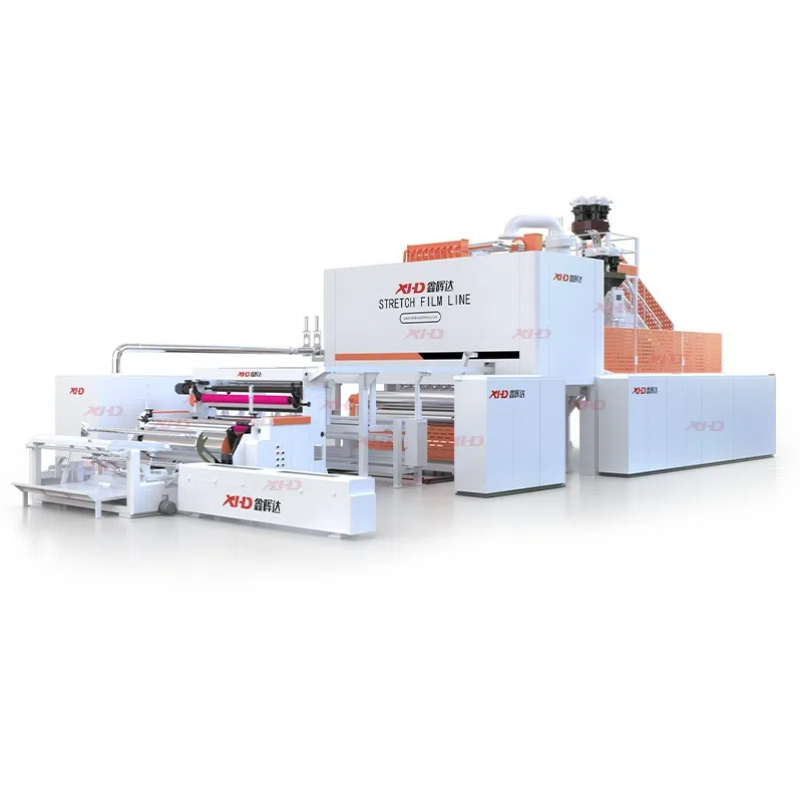
Not all stretch film machines maximize pre-stretch potential. Certain design features directly impact efficiency and consistency in wrapping.
Motorized carriages allow precise control of film feed speed and tension, reducing inconsistencies between wraps. Adjustable gear ratios in mechanical systems and dancer rolls help smooth out tension fluctuations, ensuring uniform application. Advanced tension control maintains constant film force, preventing waste and ensuring load stability. Machines without these features may experience uneven wraps, higher material usage, and reduced containment quality. Facilities using machines with optimized pre-stretch systems report film savings ranging from 20% to 50%, depending on load type and operational practices.
Integrating features such as programmable wrapping cycles and automatic load height detection can further enhance pre-stretch efficiency. These functions adjust the film feed and wrapping pattern according to load dimensions, minimizing overuse of film and reducing downtime caused by manual adjustments. Using such systems allows operators to focus on other operational tasks, improving overall productivity while reducing material costs.
Even the most advanced pre-stretch system cannot achieve optimal savings without compatible film. Proper film selection ensures that the film stretches correctly and maintains sufficient holding force.
Thin films with high elasticity are ideal for high-pre-stretch applications, offering maximum coverage per roll. Heavier or irregular loads may require thicker films to prevent tearing. Operators are encouraged to trial different film gauges and types, measuring both containment force and material usage. Switching to films designed for high-stretch applications often results in improved performance under lower material consumption. Consistent testing ensures that each pallet uses the minimum film necessary while maintaining safety and transport stability.
For industries such as pharmaceuticals or electronics, specialized films with anti-static or puncture-resistant properties may be required. Selecting films that match both pre-stretch capabilities and load requirements is essential to maximize efficiency and minimize potential damage. Film selection should be revisited regularly as product lines and load types evolve, ensuring continued cost savings and load protection.
To fully leverage pre-stretch technology, proper operational practices are critical. Training operators to adjust pre-stretch ratios, monitor tension, and inspect rolls regularly can significantly improve performance. Scheduling routine maintenance for rollers, motors, and tension systems prevents inconsistencies that can lead to film waste.
Operators should also track film usage per pallet and analyze patterns for optimization opportunities. Using data-driven approaches allows facilities to adjust pre-stretch settings for specific loads, further reducing material consumption. Implementing these practices as part of standard operating procedures ensures sustained savings and consistent wrapping quality over time. Continuous evaluation and incremental improvements can further enhance efficiency, particularly in facilities managing high-volume or diverse load types.
Investing in a stretch film machine with pre-stretch technology provides measurable benefits for manufacturers looking to reduce material costs while maintaining load security. By optimizing pre-stretch ratios, selecting compatible film types, and using machines equipped with advanced features such as motorized carriages and tension control, facilities can achieve substantial savings and consistent wrapping performance. Regular operator training, routine maintenance, and data-driven monitoring enhance these gains, ensuring long-term efficiency and reliability. Xinhuda Machinery’s stretch film machines are designed to deliver precise pre-stretch performance, high-speed operation, and reliable results across a wide range of packaging scenarios. Reducing material consumption while maintaining containment strength translates directly into operational savings and improved pallet stability. For more details on how pre-stretch technology can transform your packaging operations and help you achieve cost-effective, secure pallet wrapping, contact us today.


